
Climate & biodiversity: the new systemic risk for businesses
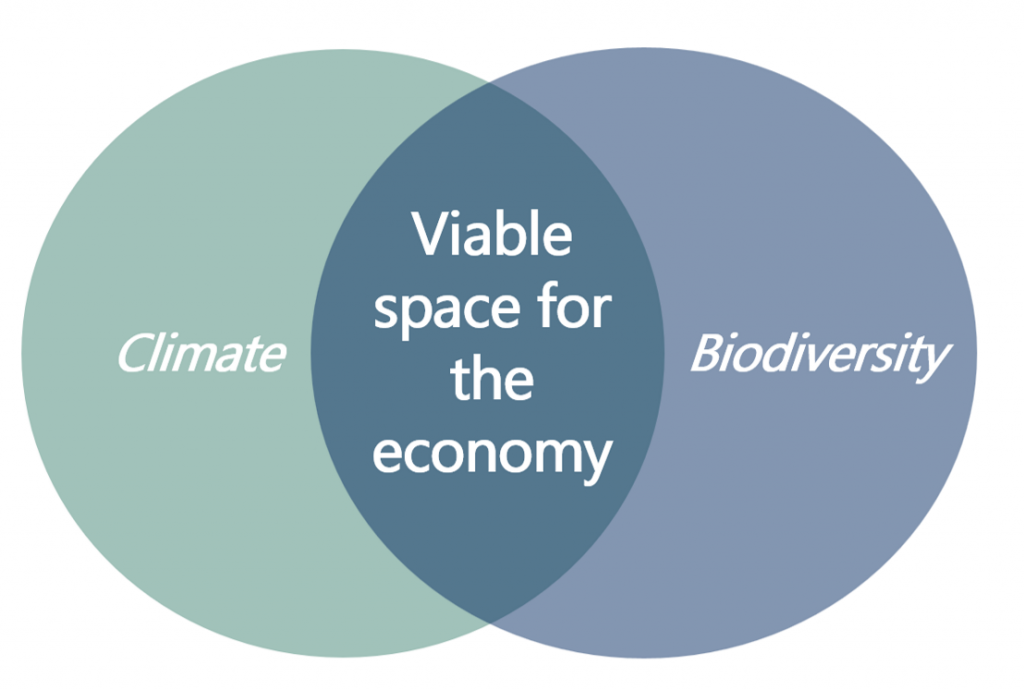
With half of global GDP directly dependent on nature, businesses are discovering that the crisis facing living organisms is no longer just an environmental issue, but a major strategic risk. Droughts, declining pollinator populations, weakened forests, supply chain disruptions: the warning signs are mounting. However, “carbon-only” climate plans often generate rebound effects or maladaptation. Faced with this new systemic risk, there is only one way forward: integrating climate and biodiversity into the heart of business models, relying on nature-based solutions.
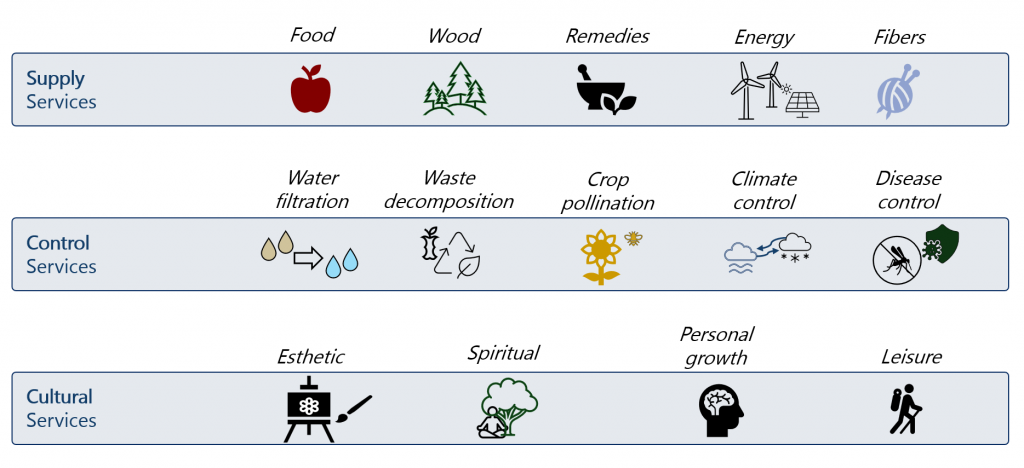
More than 50% of global GDP depends on nature: fertile soils, fresh water, pollination, forests, fishery resources, natural molecules used in pharmaceuticals and cosmetics (WEF 2020) (Figure 1). However, these ecosystem services are rapidly deteriorating: biodiversity is declining by 2 to 6% per decade (IPBES 2019), and France is no exception. Birds in agricultural areas have lost 30% of their numbers in thirty years (Fontaine 2020), while pollinators are collapsing under the combined effects of climate change, pesticides, and habitat loss.
A strategic risk for businesses
This deterioration is no longer just an environmental issue: it is an operational, financial, and strategic risk.
The 2022 heatwave in France led to a 30% drop in corn yields (Ministry of Agriculture and Food Sovereignty (MASA) 2022), water restrictions in more than 2,000 French municipalities (IGEDD 2023), and a 15% drop in hydroelectric production (RTE 2023). In Germany, low water levels on the Rhine river halted commercial shipping, paralyzing the chemical industry (Reuters 2022). In French forests, dieback linked to water stress and pests is skyrocketing (ONF 2024).
In the oceans, 14% of corals disappeared between 2009 and 2019 (Souter 2021), threatening fishing, tourism, and coastal protection.
Climate change is accelerating these pressures, altering reproduction cycles, disrupting water availability, and degrading the natural infrastructure that supports our economies. The IPBES and the IPCC affirm this in a joint report: “We cannot stabilize the climate without protecting biodiversity, nor can we protect biodiversity without stabilizing the climate” (Pörtner 2021).
Current documented risks for businesses
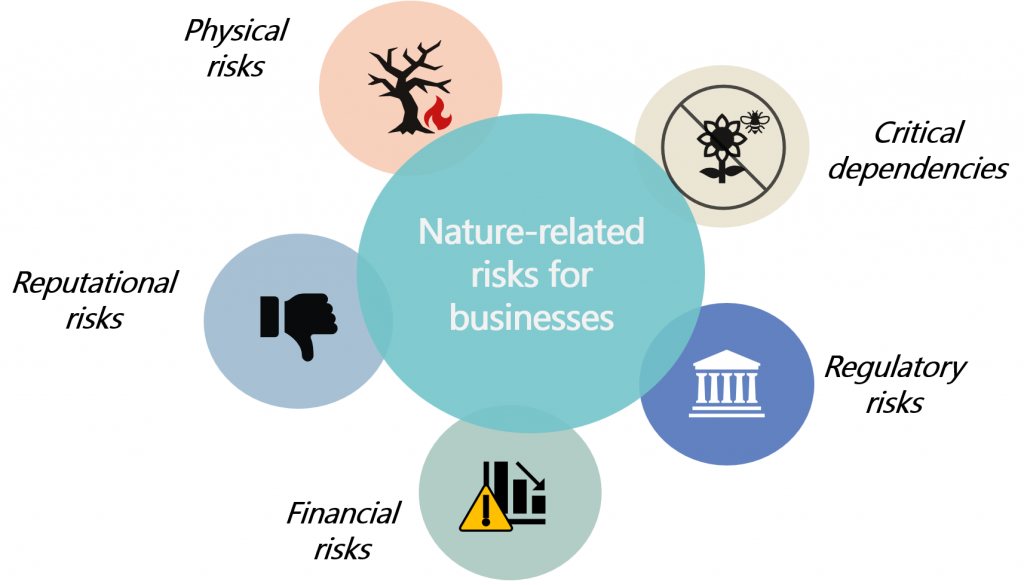
Physical risks: Droughts, fires, floods, heat waves, and water shortages are already disrupting value chains.
Critical dependencies: 75% of crops depend on pollination (IPBES 2016). 50% of medicines come from natural molecules (WHO 2025).
Regulatory risks: For companies subject to them, the CSRD, taxonomy, and CSDDD require accurate measurement of dependencies and impacts on nature.
Financial risks: Economic flows that are harmful to life represent $5.3 trillion per year (IPBES 2019). Financial institutions are already reallocating their portfolios.
Reputational risks: Consumers are demanding more robust, traceable supply chains that are aligned with planetary boundaries.
The trap of “ill-advised good ideas” : maladaptation
Faced with these risks, certain isolated climate strategies are exacerbating the situation. The IPCC refers to this as maladaptation: actions that are supposedly climate-friendly but increase the vulnerability of ecosystems, businesses, or territories.
The most emblematic case is that of bioenergy.
According to Science (Fang et al. 2022), climate scenarios that rely heavily on energy crops (e.g., RCP2.6) cause more biodiversity loss than they provide climate benefits. In France, forest monocultures weakened by droughts and fires in Gironde also illustrate the limitations of “carbon-only” approaches.
Moving from a “carbon-based” approach to a “nature & climate” approach
Nature-based Solutions (NbS), as defined by the IUCN (IUCN 2020), offer a structured response. They enable carbon storage, help businesses adapt to physical risks, and restore ecosystems.
Examples:
- Restoring wetlands to reduce flooding (case study: the Loire River).
- Replanting hedgerows to stabilize soil and protect crops (Boinot et al. 2023).
- Renaturing rivers to secure industrial water supplies (Seine-Amont).
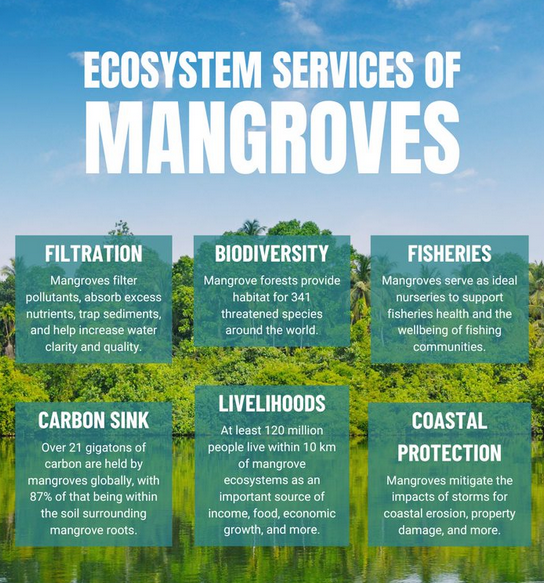
- Restoring mangroves to protect coastal infrastructure (WRI 2023) – see Figure 3.
According to (OECD 2019), every dollar invested in ecological restoration generates $4 to $30 in economic benefits in the form of reduced risks, supply stability, and enhanced ecosystem services.
The cost of inaction
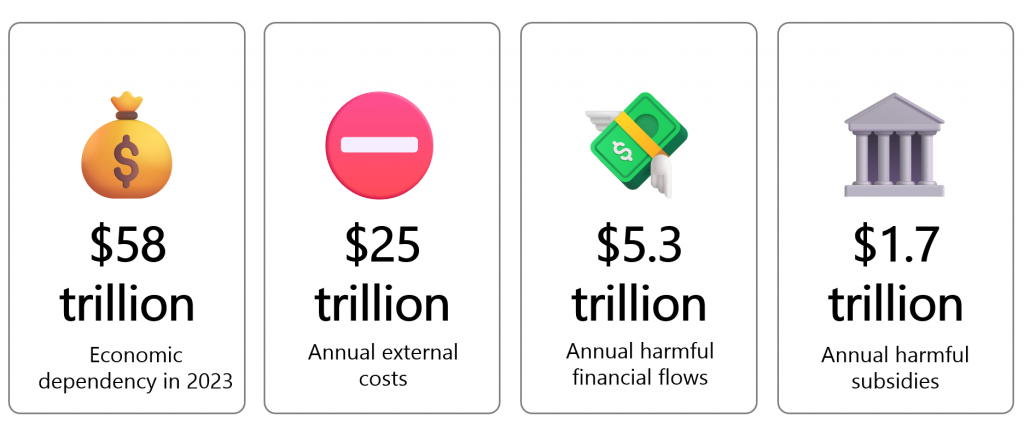
The global economy relies on a natural foundation that is crumbling (Figure 4). IPBES estimates that 55% of global GDP ($58 trillion in economic activity) now depends directly on ecosystems (IPBES 2024). Harmful effects build up a yearly amount of $25 trillion external costs: these represent pollution, loss of soil fertility, resource depletion, and health impacts that are not accounted for in economic prices.
On top of this, two financial dynamics increase the bill overtime. Private flows towards activities harmful to nature amount to $5.3 trillion per year (IPBES 2024), while governments spend $1.7 trillion annually on harmful subsidies, especially in energy and agriculture (IPBES 2024). A simple equation emerges: as long as these colossal sums fuel inaction, economic risks will continue to grow mecanically.
Conclusion
For businesses, investing in living systems is now a key issue.
Models based solely on decarbonization are insufficient and risk leading to maladaptation. Successful businesses will be those that integrate nature into the heart of their strategy, alongside AI, energy, cybersecurity, and supply chains.
In a world where planetary boundaries are becoming real economic constraints, protecting living organisms means protecting the performance, resilience, and sovereignty of businesses.
Bibliographic sources
(IPBES), Intergovernmental Science-Policy Platform on Biodiversity and Ecosystem Services. 2019. The global assessment report on biodiversity and ecosystems services.
Boinot, Sébastien, Cendrine Mony, Guillaume Fried, Aude Ernoult, Stéphanie Aviron, Claire Ricono, Eloïse Couthouis, and Audrey Alignier. 2023. ‘Weed communities are more diverse, but not more abundant, in dense and complex bocage landscapes’, Journal of Applied Ecology, 60: 4-16.
Fang, Zhongxiang, Wenmin Zhang, Martin Brandt, Abdulhakim M. Abdi, and Rasmus Fensholt. 2022. ‘Globally Increasing Atmospheric Aridity Over the 21st Century’, Earth’s Future, 10: e2022EF003019.
Fontaine, B.; Moussy, C.; Chiffard-Carricaburu, J.; Dupuis, J.; , Corolleur, E.; Schmaltz, L.; Lorrillière, R.; Loïs, G.; Gaudard, C. 2020. “SUIVI DES OISEAUX COMMUNS EN FRANCE – Résultats 2019 des programmes participatifs de suivi des oiseaux communs.” In. Paris, France: MNHN, OFB, LPO.
IGEDD. 2023. “Retour d’expérience sur la gestion de l’eau lors de la sécheresse 2022.” In.
IPBES. 2016. “The assessment report of the Intergovernmental Science-Policy Platform on Biodiversity and Ecosystem Services on pollinators, pollination and food production.” In, edited by V. L. Imperatriz-Fonseca S.G. Potts, and H. T. Ngo. Bonn, Germany.
———. 2019. Global assessment report on biodiversity and ecosystem services of the Intergovernmental Science-Policy Platform on Biodiversity and Ecosystem Services, Brondízio, E. S., Settele, J., Díaz, S., Ngo, H. T. (eds). (Zenodo: IPBES secretariat, Bonn, Germany).
———. 2024. “Thematic Assessment Report on the Interlinkages among Biodiversity, Water, Food and Health. Summary for Policymakers.” In. Bonn, Germany.
IUCN. 2020. “The IUCN Global Standard for Nature-based Solutions.” In.
Ministère de l’Agriculture et de la Souveraineté Alimentaire (MASA). 2022. “Agreste Conjonctures – Grandes cultures – La récolte de maïs grain la plus faible depuis 1990.” In.
OECD. 2019. “Biodiversity: Finance and the Economic and Business Case for Action.” In.
ONF. 2024. ‘Avec les dépérissements actuels, on se situe dans une ère nouvelle qui nous conduit vers une forêt nouvelle’. https://www.onf.fr/vivre-la-foret/%2B/1fe6::avec-les-deperissements-actuels-on-se-situe-dans-une-ere-nouvelle-qui-nous-conduit-vers-une-foret-nouvelle.html.
Pörtner, H.O.; Scholes, R.J.; Agard, J.; Archer, E.; Arneth, A.; Bai, X.; Barnes, D.; Burrows, M.; Chan, L.; Cheung, W.L.; Diamond, S.; Donatti, C.; Duarte, C.; Eisenhauer, N.; Foden, W.; Gasalla, M. A.; Handa, C.; Hickler, T.; Hoegh-Guldberg, O.; Ichii, K.; Jacob, U.; Insarov, G.; Kiessling, W.; Leadley, P.; Leemans, R.; Levin, L.; Lim, M.; Maharaj, S.; Managi, S.; Marquet, P. A.; McElwee, P.; Midgley, G.; Oberdorff, T.; Obura, D.; Osman, E.; Pandit, R.; Pascual, U.; Pires, A. P. F.; Popp, A.; Reyes-García, V.; Sankaran, M.; Settele, J.; Shin, Y. J.; Sintayehu, D. W.; Smith, P.; Steiner, N.; Strassburg, B.; Sukumar, R.; Trisos, C.; Val, A.L.; Wu, J.; Aldrian, E.; Parmesan, C.; Pichs-Madruga, R.; Roberts, D.C.; Rogers, A.D.; Díaz, S.; Fischer, M.; Hashimoto, S.; Lavorel, S.; Wu, N.; Ngo, H.T. . 2021. “IPBES-IPCC co-sponsored workshop report on biodiversity and climate change.” In.: IPBES and IPCC.
Reuters. 2022. ‘Why low water levels on the Rhine river hurt Germany’s economy’. https://www.reuters.com/business/environment/why-low-water-levels-rhine-river-hurt-germanys-economy-2022-08-15/.
RTE. 2023. “Bilan Electrique 2022 – Rapport complet.” In.
Souter, D., Planes, S., Wicquart, J., Logan, M., Obura, D., Staub, F. (eds). 2021. “Status of coral reefs of the world: 2020 report.” In.: Global Coral Reef Monitoring Network (GCRMN) and International Coral Reef Initiative (ICRI).
WEF. 2020. “Nature Risk Rising: Why the Crisis Engulfing Nature Matters for Business and the Economy.” In.
WHO. 2025. ‘Biodiversity’. https://www.who.int/news-room/fact-sheets/detail/biodiversity.
WRI. 2023. ‘Community Lessons for Successful Nature-Based Solutions Implementation’, Accessed 25 November 2025. https://www.wri.org/update/community-lessons-successful-nature-based-solutions-implementation.
 Member of the European PEF (Product Environmental Footprint) Technical Advisory Board.
 Member of the French ADEME environmental labelling working group.
