
ISYBIO® : assessing biodiversity impacts of agriculture systems
Biodiversity is becoming a strategic issue for business
How can we assess impact of agricultural systems on biodiversity?
This issue is becoming increasingly strategic for companies as climate risks accelerate, regulatory requirements evolve (CSRD, TNFD), and agricultural supply chains become more vulnerable. For many years, environmental strategies focused primarily on climate and carbon emissions. Today, however, companies must also understand their dependencies on nature: soil health, water quality, pollination, yield stability, and territorial resilience.
In this context, agricultural territories are becoming a critical scale for assessing biodiversity impacts and ecosystem resilience; it is where impacts, dependence and adaptation capabilities meet.
Yet few tools can directly link agricultural practices to biodiversity dynamics and territorial resilience. This is precisely why ISYBIO® (Indicator of the Impact of Agricultural Systems on Biodiversity) was developed: to transform complex agricultural data into actionable insights for decision-making.
Current biodiversity approaches are reaching their limits
The assessment of Nature-related challenges is currently gaining strong momentum. Numerous methodologies have emerged in recent years to better characterize the impacts of human activities on biodiversity. However, unlike carbon, biodiversity issues cannot boil down to a single, universal metric.
Impacts depend heavily on agricultural practices, ecological characteristics, landscape structure, cropping systems… This complexity explains the limitations of many current approaches.
Some methods accurately describe geographical contexts but fail to account for agricultural practices. Others characterize specific environmental pressures without providing an integrated view of local dynamics. Above all, many approaches remain focused solely on an impact-driven logic.
But companies must now also understand their reliance on Nature: yield stability, soil fertility, water regulation, and the capacity of ecosystems to absorb climate-related hazards. In agricultural territories, biodiversity impacts, ecological dependencies, and climate vulnerabilities are deeply intertwined.
The challenge is therefore no longer just about measuring the environmental footprint but about understanding how local dynamics influence the future resilience of supply chains.
The agricultural territory: where impacts and dependencies meet
Agricultural territories are not merely production spaces. They are complex systems where several elements interact: agricultural practices; ecological dynamics ; landscape organization; availability of natural resources; adaptation capabilities.
Agricultural activities directly influence local ecosystems: soil quality, ecological continuity, habitat diversity, water availability, and landscape structure. But this relationship also works the other way around.
The performance and resilience of agricultural systems themselves depend on properly functioning ecosystems. Soil fertility, pollination, water regulation, and resistance to climate-related hazards rely heavily on the services provided by Nature.
Agricultural territories thus become the arena where key factors converge, such as impacts of human activities on biodiversity, dependencies of production systems on ecosystem services and adaptation capabilities of agricultural supply chains.
This relationship forms what we describe as the “Territorial Nexus”: the scale at which impacts, dependencies, and resilience are intertwined. From this perspective, biodiversity can no longer be treated merely as a reporting or regulatory compliance issue. It is becoming a structuring factor for local resilience and the securing of supply chains.
ISYBIO®: transforming agricultural practices into decision-making indicators
To address growing biodiversity challenges, companies need indicators capable of linking concrete agricultural data to local resilience pathways. This is precisely the objective of ISYBIO®.
An approach rooted in agricultural practices
Developed to assess the impacts of agricultural systems on local biodiversity, ISYBIO® relies on an approach directly rooted in farming practices.
The indicator considers various parameters that influence ecological dynamics:
- Soil management;
- Crop rotations;
- Cover crops;
- Fertilizer use;
- Plant protection products (pesticides);
- Landscape structure;
- Agroecological infrastructure.
This approach moves beyond ‘purely declarative interpretations’ of biodiversity challenges.
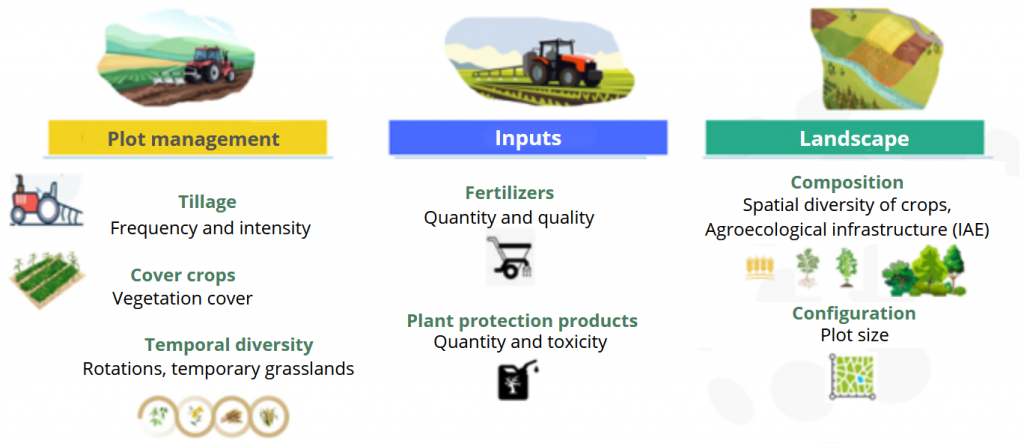
Figure 1: List of parameters included in the calculation of the ISYBIO® indicator for arable crops.
By directly linking agricultural practices to pressures on ecosystems, ISYBIO® provides an operational view of territorial dynamics associated with production systems.
A multi-scale perspective
Impacts and dependencies on Nature do not play out solely at the plot level. They also depend on landscape dynamics, habitat diversity, and spatial organization of agricultural systems.
ISYBIO® therefore offers a multi-scale analysis ranging from soil to landscape. This approach provides a better understanding of interactions between agricultural practices, ecosystem functioning, and the local context.
A harmonized and actionable indicator
To ensure results are comparable and usable, ISYBIO® generates a harmonized score to evaluate different types of agricultural systems. This approach facilitates the comparison between supply chains, the analysis of transition pathways, the identification of leverage points for improvement and the steering of Nature-focused initiatives.
Initial results show significant gaps between arable crops, permanent crops and permanent grasslands, reflecting the direct influence of agricultural practices on biodiversity dynamics.
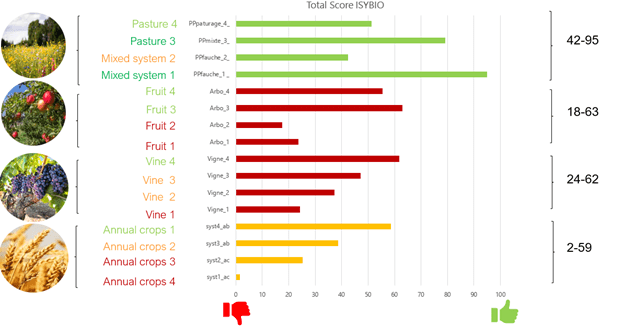
Figure 2: Example of ISYBIO® scores obtained for different types of agricultural land use: arable crops (in yellow), permanent crops (in red), and permanent grasslands (in green). An identical score for an arable crop, a grassland, or a permanent crop indicates comparable biodiversity levels. The values on the right of the graph specify the ranges of possible scores for each land use type (arable crops, vineyards, fruit, and permanent grasslands).
Beyond the score itself, the value of ISYBIO® lies in its ability to transform complex agricultural data into clear, decision-making metrics.
ISYBIO® helps companies steer their Nature pathways
Better characterize biodiversity pressures
By directly linking agricultural practices to the pressures exerted on ecosystems, ISYBIO® provides a more granular understanding of the biodiversity dynamics associated with different production systems.
The indicator can help identify specific zones under high biodiversity pressure, higher-risk agricultural practices and supply chains presenting specific vulnerabilities. Cross-referenced with regional, economic, and ecological data, these results provide a more systemic view of Nature-related challenges.
Guide agricultural transition strategies
Companies today face a proliferation of Nature commitments, often without the tools to effectively guide the actions that need to be implemented.
ISYBIO® sheds light on the potential effects of different agricultural practices onbiodiversity and objectively identifies levers for improvement, such as input reduction, diversification of crop rotations, preservation of agroecological infrastructure, enhancement of territorial diversity and evolution of soil management.
This approach can notably help objectively validate regenerative agriculture pathways.
Track progress pathways
One of the main challenges of biodiversity strategies today is moving past a purely declarative logic. Companies need tools capable of concretely measuring the effects of pathways implemented within agricultural supply chains.
In particular, ISYBIO® makes it possible to track the evolution of agricultural practices over time, compare different transition scenarios, assess the potential benefits of specific practices and document improvement pathways.
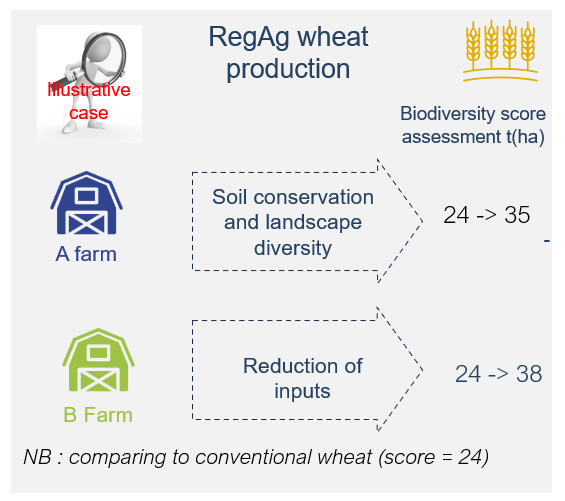
Figure 3: Example of farms assessed using the ISYBIO® indicator.
Furthermore, initial results show that two farms within the same supply chain can present very different biodiversity profiles. Those changes depend on the agronomic choices made and the associated local dynamics.
Evaluate agricultural frameworks and labels
ISYBIO® can also be used to analyze different labels, standards, or agricultural frameworks. Initial results obtained for arable crops show significant differences between certain certification systems.
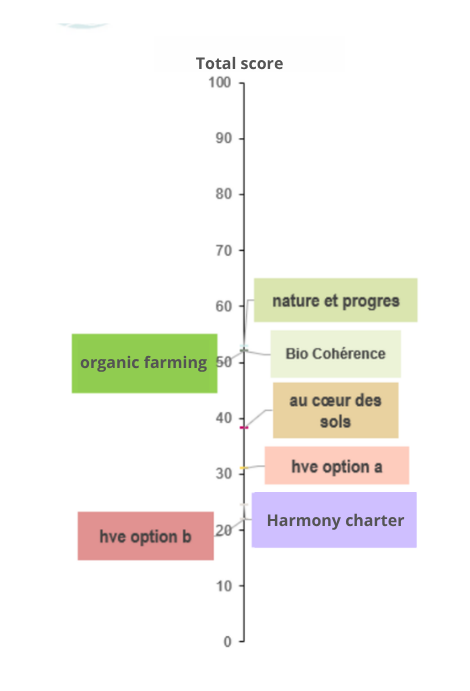
Figure 4: Arable crop ISYBIO scores for different labels and SIQO (Official Signs of Quality and Origin).
These results illustrate an essential point: biodiversity performance cannot be reduced to a binary opposition between agricultural models.
Two initiatives claiming similar environmental ambitions can produce very different biodiversity outcomes depending on the practices actually implemented and the associated local contexts.
Biodiversity, yields, and local resilience
One of the major challenges for companies today is to objectively demonstrate the actual benefits of initiatives undertaken in agricultural supply chains while considering the associated production constraints.
Combined with Life Cycle Assessment (LCA) approaches, ISYBIO® allows biodiversity performance to be integrated into a more systemic view of agricultural systems. This integration specifically helps account for agricultural yields, production levels, ecological characteristics and ecosystem vulnerability.
This combination is essential to avoid an oversimplified view of biodiversity issues
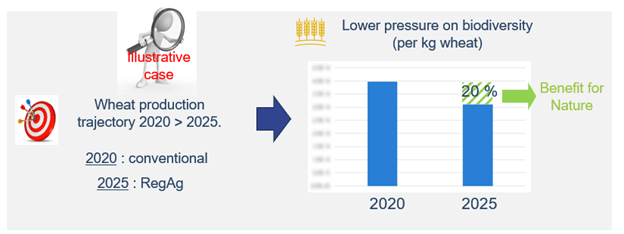
Figure 5: Example of a pathway evaluated with ISYBIO – concrete benefits are identified.
Indeed, a practice that benefits local biodiversity can produce different effects depending on the associated production levels, local context, or the ecological sensitivity of the areas involved.
The challenge is therefore not just to compare agricultural practices, but to understand how different pathways interact with the ecological and productive capacities of the territories.
Toward a new generation of Nature steering
Nature-related challenges are profoundly transforming how companies perceive their agricultural supply chains. Until now, initiatives focused primarily on reducing environmental impacts and meeting reporting obligations.
However, in the face of accelerating climate risks, ecosystem degradation, and growing pressure on natural resources, this approach is no longer enough. Companies must now understand how their activities interact with the territories they depend on, and how ecological dynamics influence the future resilience of their supply chains.
In this context, biodiversity indicators can no longer be designed solely as compliance tools. They are progressively becoming decision-support instruments that highlight transition pathways, adaptation capabilities, robustness of agricultural systems and the securing of supply chains.
This is precisely the approach behind ISYBIO®. By connecting agricultural practices, biodiversity, and local dynamics, the indicator helps build a more systemic understanding of Nature challenges. The “Territory” thus becomes the space where impacts on biodiversity, dependencies on ecosystems, adaptation capabilities and resilience of supply chains meet.
A new generation of Nature steering is progressively emerging: an approach in which companies no longer seek solely to limit their impacts, but also to strengthen the capacity of agricultural territories to maintain their ecological and productive functions over the long term.
FAQ — Biodiversity and Agriculture
How do you measure the biodiversity impacts of agricultural systems?
Biodiversity impacts can be evaluated based on the agricultural practices implemented: soil management, crop rotations, inputs, agroecological infrastructure, or landscape structure. Indicators like ISYBIO® make it possible to link these practices to local ecological dynamics.
Why is biodiversity a strategic issue for companies?
Biodiversity directly influences the resilience of agricultural supply chains: soil fertility, water availability, pollination, resistance to climate shocks, and yield stability.
What is an agricultural biodiversity indicator?
An agricultural biodiversity indicator assesses the potential effects of agricultural systems on ecosystems by considering both farming practices and local dynamics.
What is the difference between impacts and dependencies on Nature?
Impacts refer to the pressures exerted on ecosystems. Dependencies refer to the services provided by Nature upon which human activities rely: soil quality, water regulation, pollination, or climate resilience.
How can biodiversity be integrated into sourcing strategies?
Companies can integrate biodiversity into their sourcing strategies by assessing the agricultural pathways, local dynamics, and ecological vulnerabilities associated with their supply chains.
 Member of the European PEF (Product Environmental Footprint) Technical Advisory Board.
 Member of the French ADEME environmental labelling working group.
